 |
| Franco Pinna / QUALCHE SGUARDO DELLA TARANTA |
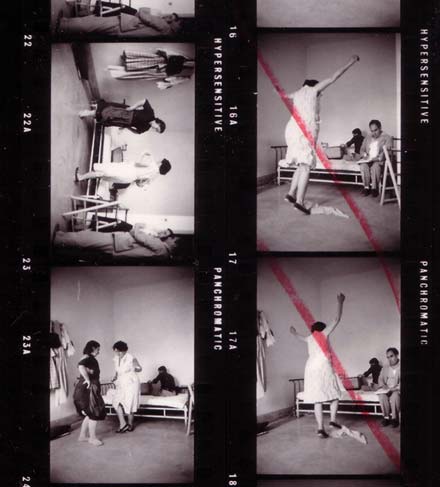
The materials selected for this exhibition, a preview of a much broader and articulated (SGUARDO DELLA TARANTA), still under preparation, provide testimony, although numerically small, of the methods pursued and the results achieved by Franco Pinna during his shipment in Salento of 1959. Knowledge to their support derive from the results of the cataloguing of the photographer’s corpus anthropologicum, that the FRANCO PINNA ARCHIVE / LABORATORY STUDIES ON photojournalism in Rome is carrying out for over a decade, receiving scientific publications and exhibitions, most reliable on the subject.
Much of the fame of Franco Pinna (La Maddalena / SS 1925 - Rome 1978), one of the greatest Italian photographers of the twentieth century, is linked to the campaign of scientific documentation that he has done following Ernesto De Martino (1908-1965), probably the maximum Italian anthropologist of the last century.
Previously, Pinna had followed De Martino in Lucania, in 1952 and in 1956, participating in the research that would bring him to the publication of MORTE E PIANTO RITUALE NEL MONDO ANTICO (Einaudi 1958). In a third occasion, from which would result the items for a new publication, LA TERRA DEL RIMORSO (The Saggiatore 1961), Pinna was involved in the shipment in Salento that De Martino opened in 1959 to follow the events of Tarantismo, the apotropaic ritual related to the alleged effects of the bites of tarantulas, during the annual feast of SS. Peter and Paul (June 20-July 10). The few operational constraints have not prevented to Pinna to derive from the shipment a memorable visual documentation, one of the most extraordinary of the Italian photography and in particular its neorealistic production, which has recently clarified the essential importance of social survey. Pinna was not the first author who took photographically the Salentine tarantism. It was however the first time that the events would have been represented in an organic and analytical way, aware that by the end of the fifties phenomena such those were being progressive disappearance. To pursue this goal, Pinna strives to adapt the ways of the documentation record, that he usually charged as a photojournalist, to a new feature, more available to the scientific mission that De Martino, equipped for parallel sound recordings, could expect. The most significant among the methods used is that of "Read Sequence", "paracinematografic" in his conception of the fund, that Pinna had already experienced. During the two weeks of mission spent in Salento, Pinna has made a photographic documentation which includes about 600 records, mainly setted between Nardò Galatina and Cerfignano. The part built around the feast of the Galatina patron (28-30 June), where, inside and outside the Chapel of St. Paul, there were public performances of possession resulting from the bite of "Taranta" and the following releases, mainly on girls and women , is the focal point of the documentation. No less attention is still reserved for the preparation contour of Nardò, where are the so-called simulated home Therapies, allowing Pinna and De Martino to follow for the first time an entire of coreutico cycle of dispossession (spasmodic dance that " Tarantated" performed under the rhythm of a popular music), and a subsequent epilogue to Cerfignano, place of residence of one of the "Tarantated" (Filomena) among the most active in the "dispossession" held a few days before in Galatina.
Today we know that self-disclosure and evocative photographs of Pinna, despite some attempts to resize for hypothetical directives of De Martino that currently are the result of imagination (see cfr. F. Faeta in I viaggi nel Sud di Ernesto De Martino, Bollati Boringhieri 1999), permit to give at an extraordinary cognitive tool upon tarantism that ‘s not only the integration of anthropologic research. Today we know that our collective memory on tarantism couldn’t exist without those images, characterizing at the same level of De Martino analysis. Pinna has become an integral part of our concept of Tarantism, as De Martino, as Maria Rosaria Nardò, as Filomena of Cerfignano as other characters that they had cross in the famous expedition of 1959. More generally, today we attach an essential value to the visual documentation of anthropological phenomena, differently from what happened in the eras in which the literary medium exerted on them an exclusive primacy of jurisdiction. It’s for this reason that the experience of Pinna in Salento deserves special consideration in the evolution of collective consciousness around the anthropological facts, not just the national level. |
|
|
| |
Franco Pinna
Franco Pinna (La Maddalena / SS 1925-Rome 1978) was certainly one of the greatest Italian photographers of the twentieth century.
His professional beginnings (1952), after the Roman militant resistance and a brief experience as an operator of movie’s documentaries, occur within the cooperative Fotografi Associati (with Plinio De Martiis, Caio Garrubba, Nicola Sansone and Pablo Volta). The practice of photo journalism is conceived in parallel to an intense political militancy in which Pinna stands out as activist of the Italian Communist Party; as photojournalist has taken over with Tazio Secchiaroli, the police officers attacks during a demonstration against anti-NATO (Rome, June 1952), managing to escape from the reaction of law enforcement and using blitzphotographie methods that would later characterized the "paparazzi"’s style.
Between 1952 and 1959, the photographic experience of Pinna are in the most appropriate and exemplary manner considered neorealistic. In autumn 1952, Pinna follows the anthropologist Ernesto De Martino in the first multidisciplinary scientific expedition carried out in Lucania, in the province of Matera, which would be followed by another (1956), in the province of Potenza. From them, Pinna has obtained documentation of extraordinary value and cultural expression which were presented in exhibitions of remarkable success. In 1956 Pinna, following the anthropologist Franco Cagnetta makes an photographic investigation on material and moral conditions of the suburban district in Rome by adopting for the first time the sequence as a form of representation of events and rituals, obtaining effects like Cesare Zavattini, who had theorized the so-called "shadowing." In 1956, after the occupation of Hungary by the USSR, Pinna concludes his militancy in the PCI
In 1959, Pinna’s anthropological photo research reach its peak of maturity during an expedition in Salento observing the rites of “Tarantismo”, again with Ernesto De Martino, developing better the conditions already reported by documentation of the suburban distict of Rome . During that year, Pinna published his first photobook, La Sila, signing its autonomy from the strictly anthropological experiences which were tied with De Martino. In 1961 he published, Sardegna una civiltà di pietra, his more significant photobook. That same year, the modest treatment delivered by De Martino in La terra del rimorso, Scientific report of the expedition in Salento, undermines the relationship between the photographer and the researcher.
Favorite Reporter by magazines such as " Noi Donne”, “L’Espresso” and "Panorama", Pinna since 1964 becomes personal photographer of Federico Fellini, for whom he had already worked during the preparation of La strada. From the movies (Giulietta degli spiriti, Tre passi nel delirio/Toby Dammit, Satyricon, Block-notes di un regista, Roma, Amarcord, Il Casanova di Federico Fellini), Pinna derives material to illustrate special on the best known magazine in the world and large spread photobooks (Fellini's Filme). Sudden death has prevented the conclusion of the documentation draft Itinerari emiliani, which began in 1976 on behalf of the Regione Emilia-Romagna, and to conduct further organizational activities within dell'AIRF (Associazione Italiana Reporters Fotografi).
|
|



 Click on thumbnails